
What to notice when you visit an elderly parent at Christmas (and what to do in January)
Notice the ordinary things: the post, the fridge, how they move around the house, who they've spoken to this week and how they sound when the house is quiet. Don't turn Christmas into an inspection. Pick one thing to talk about before you leave, agree how you'll keep in touch, and put a date in January to look at it again together.
Why is this harder than it sounds?
Christmas is often the only time of year you see your parent's everyday life for more than an afternoon, so small changes show up that a weekly phone call hides. It's also a bad moment for a big conversation: the house is full, everyone is tired, and nobody wants a row over the washing-up. Then everyone drives home, January is dark and quiet, and what you noticed fades without anything changing.
Five things worth noticing while you're there
None of these proves anything on its own. A pattern, or a change since your last visit, is simply a reason for a kind conversation.
- The post. Unopened letters, bills or reminders piling up can mean paperwork has become a chore.
- The fridge and cupboards. Is there food they'd actually eat this week, and is it in date? The NHS lists unintentional weight loss and a lack of interest in eating and drinking among common signs of malnutrition, and says people aged 65 and over are particularly at risk.
- How they move about the house. Stairs taken slowly, holding on to furniture, a room they've stopped using.
- Who they've spoken to this week. Ask about friends, neighbours and groups by name. The NHS says older people are particularly at risk of loneliness if they live alone or don't have regular contact with others.
- How they sound when it's just the two of you. Brighter than on the phone, or flatter? Tired, or simply happy to have you there?
How to bring it up without spoiling the visit
Choose a quiet moment, one to one, not the dinner table. Say what you noticed and how you feel, not a verdict: "I saw the post has built up, can I help you go through it?" lands better than "You're not coping."
Ask what they find harder than last year and what would make the winter easier. It's their home and their choice, and people say yes more readily to something they've picked themselves.
What to do in January
The visit ends but the noticing shouldn't. Set a regular time to be in touch, share what you saw with your brothers and sisters so one person isn't carrying it, and book the next visit before the decorations come down, so there's something in the diary to look forward to.
If something you noticed worries you about their health, encourage them to speak to their GP, or call NHS 111 if it can't wait. In an emergency, call 999. If they seem to be struggling to cope, or tell you they are, Samaritans are there to listen on 116 123.
What should you do?
Notice quietly for a day or two
Help with ordinary jobs, such as making tea, putting the shopping away or fetching the post. You'll see far more than by asking "are you managing?"
Write down what you saw
A few lines on your phone, with what was fine as well as what wasn't. In February you won't remember whether the fridge was nearly empty or you just arrived before the big shop.
Pick one thing to talk about
One small change is easier to agree to than a list. A weekly shopping delivery, help with the post, or a regular call.
Agree how you'll keep in touch
Decide the days and time together while you're in the same room. A call they expect feels like company; a surprise call can feel like checking up.
Tell your brothers and sisters
Share what you noticed and what you agreed, in one message everyone can see, and split who rings when.
Put a January date in the diary
A call or visit two or three weeks into the new year, to ask how the change is going and whether anything else would help.
What tends not to work
Raising it in front of the whole family on Christmas Day.
Leaving with a long list of things for them to fix alone.
Tidying, sorting and rearranging their home without asking.
Promising to ring every day and stopping by the second week of January.
Common questions
What are the signs an elderly parent needs more help at home?
There's no single sign. Families often notice post piling up, less food in the house, moving around more carefully, seeing fewer people, or sounding flat. A change since your last visit matters more than any one thing, and it's a reason to talk, not to decide for them.
Should I say something at Christmas or wait until afterwards?
A short, kind, one-to-one chat before you leave usually works better than a phone call weeks later, because you can agree a next step together. Keep the bigger conversations for a calmer day.
Who can I ask about extra help for my parent?
In the UK, anyone can ask their local council's adult social services for a free care needs assessment. If your worry is about their health, their GP is the place to start, or NHS 111 if it can't wait.
Where Nura fits
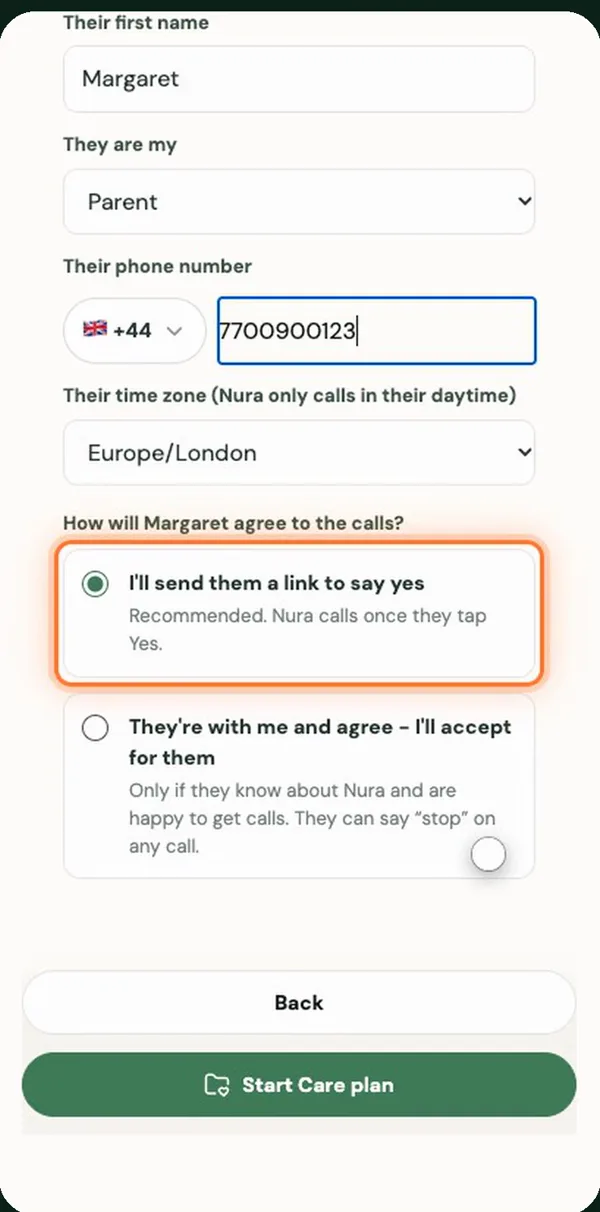
Nura can keep some of the contact going after you've gone home. While you're together, you start a Care plan about your parent with their first name and number, and they agree by tapping Yes on a link (or you confirm they're happy to be called). Nura then gives them a short call on their ordinary phone, only between 9am and 8pm their time, asks how things are going, and sends you a short summary of each call. They can say "stop" on any call. Nura is a companion that keeps in touch; it isn't an alarm or an emergency service and it doesn't judge anyone's health. Calls to someone you care for are part of Nura Plus. Nura Plus is US$9.99 a month after a 14-day free trial (prices may vary by region); you add a card to start the trial and can cancel before it ends.
Sources
General information, not medical advice. Nura does not diagnose, prescribe or replace your clinician. In an emergency call 999 (UK) or 911 (US); in the UK, NHS 111 can help if you need medical help but it isn't an emergency.