
How to talk to an elderly parent about needing more help
Choose a calm moment, start from what you've noticed and how you feel rather than what they can't do, ask what they find hard and what they'd want, and offer one small, specific option rather than a whole plan. Expect several conversations, and remember that if they can decide for themselves, the decision is theirs.
Why is this harder than it sounds?
To your parent, "you need help" can sound like "you're losing your independence" or "you're going into a home." Pride, fear and not wanting to be a burden all push them to say they're fine. Siblings may disagree, and the conversation often happens in a rush after a fall or hospital stay, when everyone is frightened.
Words that tend to help
- "I've noticed… and I've been worrying about you."
- "What's the hardest part of the day at the moment?"
- "What would make things easier?"
- "What matters most to you about staying here?"
- "Could we try it for a month and see how it feels?"
Words that tend to backfire
- "You can't cope any more."
- "We've decided…"
- "It's for your own good."
- Comparisons with other people's parents.
What should you do?
Pick the moment
Not in the middle of a crisis or a family gathering. A quiet visit or a walk is better.
Get siblings on the same page first
Agree the main concern and who will lead, so your parent doesn't feel ambushed by mixed messages.
Start with what you've noticed
Specific, kind and about your feelings: "I noticed you've stopped going to the club and I've been worried."
Listen more than you talk
Ask what they find hard and what they're afraid of. The real worry might be something you hadn't guessed.
Offer one small step
A grab rail, a cleaner, a weekly call, a pendant alarm, a needs assessment. Make it a trial.
Come back to it
Expect several conversations. Keep the door open and check how the first step is going.
What tends not to work
Making decisions behind their back.
Leading with care homes when smaller help hasn't been tried.
Giving up after one difficult conversation.
Common questions
What if my parent refuses help?
If they can make the decision, respect it, keep talking, and make sure they know how to get help in an emergency. A council needs assessment can sometimes be easier to accept as "just finding out".
Who can help with the conversation?
A trusted friend, their GP, or an advocate. The NHS notes advocates can speak up for someone and are often free.
Where Nura fits
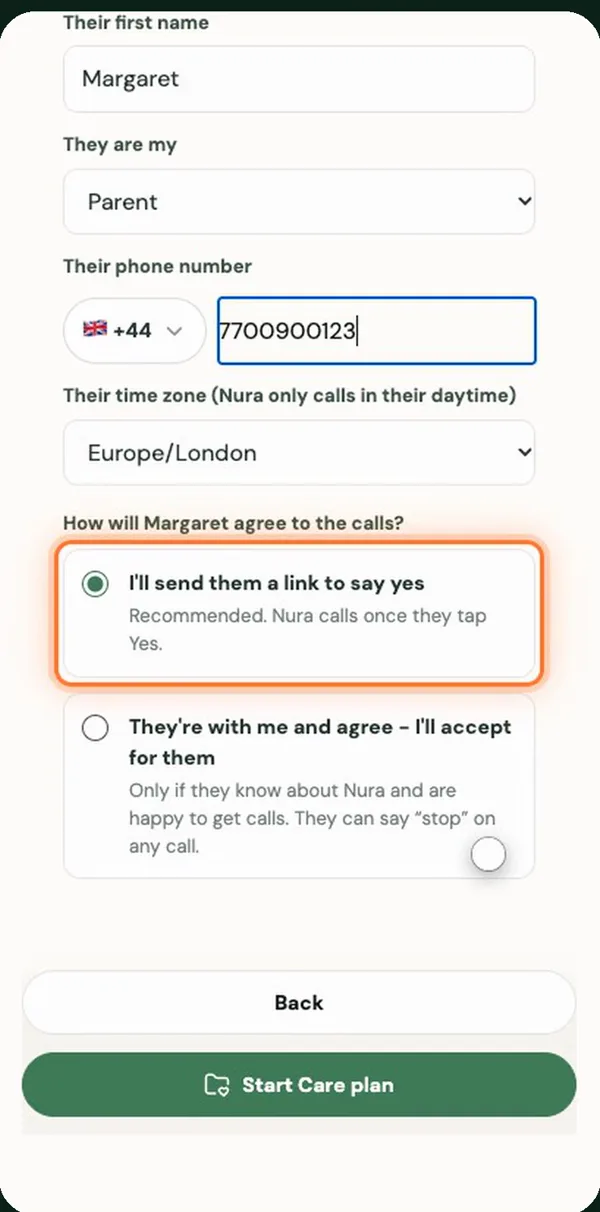
If a regular check-in call is the small step your parent agrees to, Nura can be it. They get a link and choose whether to say yes; Nura only calls after they do, only in their daytime, and they can say "stop" on any call. You get a short summary of each call, which can make the next family conversation easier because it's based on how things have actually been going.
Sources
General information, not medical advice. Nura does not diagnose, prescribe or replace your clinician. In an emergency call 999 (UK) or 911 (US); in the UK, NHS 111 can help if you need medical help but it isn't an emergency.