
Worried about an elderly parent living alone? What to do
Start by naming what you're actually worried about (falls, eating, loneliness, forgetting things, or just not hearing from them), then talk to your parent about it, agree a regular way of keeping in touch, and line up practical help such as a personal alarm or a free council needs assessment. Most worry eases once there's a plan and someone notices early when something changes.
Why is this harder than it sounds?
The worry is often vague, which makes it hard to act on. You see your parent on a good day, or hear a cheerful voice on the phone, and can't tell whether things are fine or quietly slipping. Bringing it up can feel like accusing them of not coping, and many older people play things down because they don't want to be a burden or lose their independence. Meanwhile you're juggling your own work and family, sometimes hours away.
What are the signs an elderly parent is struggling at home?
No single sign means your parent can't live alone, but a pattern is worth a conversation. Things families often notice:
- Less food in the fridge, out-of-date food, or weight loss. The NHS lists unintentional weight loss and a lack of interest in eating and drinking among common signs of malnutrition, and says people aged 65 and over are particularly at risk.
- Post piling up, bills unpaid, or the house much less tidy than usual.
- Bruises, a new reluctance to use the stairs, or mentions of "a little slip".
- Seeing friends less, dropping groups or hobbies, sounding flat on the phone.
- Missed appointments, repeat questions, or confusion about days.
How do you bring it up without a row?
Lead with what you've noticed and how you feel, not a verdict: "I noticed the fridge was nearly empty and I've been worrying about you" lands better than "You're not eating properly." Ask what they find hard and what would help. It's their home and their decision, and people accept help more readily when they've chosen it.
Pick one thing to change first. A regular call, a key safe or a weekly shopping delivery is easier to say yes to than a whole new arrangement.
What should you do?
Write down the specific worry
"I don't know if she's eating" points to a different fix than "I'm scared he'll fall and no one will know." Be specific so the help matches the problem.
Talk to your parent first
Ask what they'd find reassuring rather than intrusive. Some people like a morning call; others would rather a text, or a visit twice a week.
Agree a rhythm of contact
A regular time to be in touch makes it easier to notice when something is off, without it feeling like a test.
Cover the emergency gap
Regular calls can't catch a fall between them. The NHS describes personal alarms, including ones that alert a family member's phone or a 24-hour monitoring service, and key safes so family or emergency services can get in.
Ask the council for a needs assessment
It's free, anyone can ask, and it's the route to things like help at home or equipment. If they don't qualify, the council should still give free advice on local help.
Share it out
Siblings, grandchildren, a neighbour or a friend from church or the club. Write down who checks when so there are no gaps.
What tends not to work
Deciding for them. Plans made without your parent tend to be quietly ignored.
Making every call a health check. They'll start dreading it and tell you less.
Installing cameras or tracking without their agreement.
Carrying all the worry alone until you burn out.
Common questions
When should an elderly parent stop living alone?
There's no set age. It's usually when daily routines, safety or health can't be managed even with help at home, adaptations and alarms. A council needs assessment can help you and your parent judge that together.
Can I make my parent accept help?
If they have capacity to decide, no; it's their choice. You can explain your worries, offer options and keep the door open.
Who can I talk to about my worries?
Your local council's adult social services, and in the UK charities such as Age UK and Independent Age run free helplines.
Where Nura fits
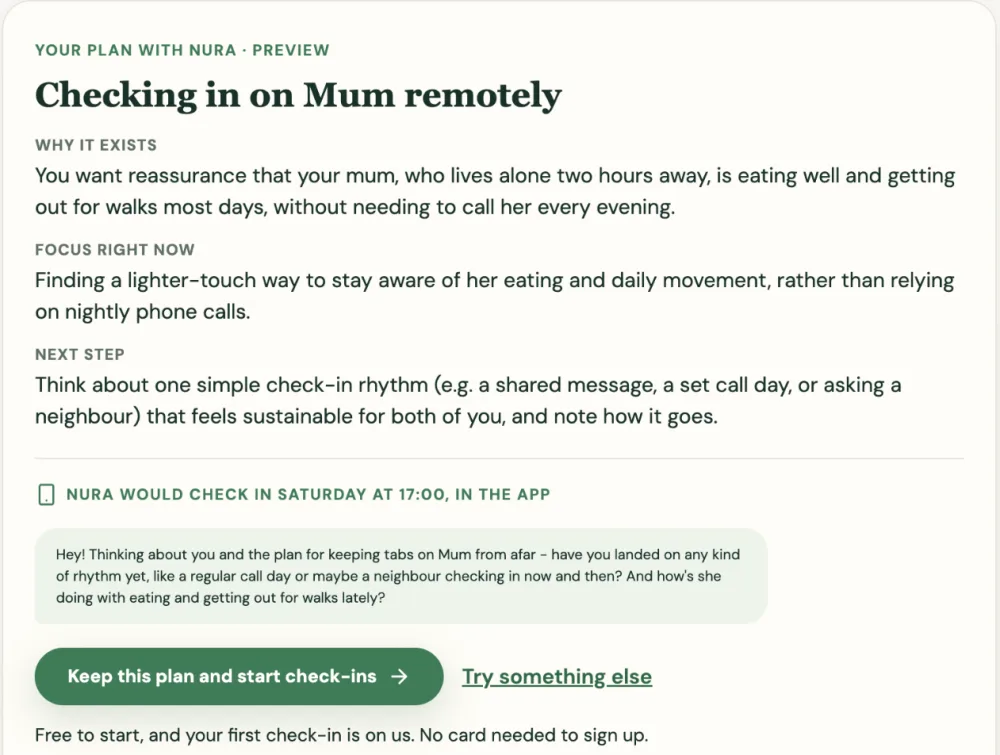
Nura can do some of the regular checking in for you. You start a Care plan about your parent with their first name and number and send them a link; Nura only calls once they tap Yes (or you confirm they've agreed). Calls ring only between 9am and 8pm their time, Nura asks how things are going, and you get a short summary of each call. They can say "stop" on any call. It isn't an alarm or an emergency service, so it works alongside those, not instead of them.
Sources
General information, not medical advice. Nura does not diagnose, prescribe or replace your clinician. In an emergency call 999 (UK) or 911 (US); in the UK, NHS 111 can help if you need medical help but it isn't an emergency.