
What to do if an elderly parent falls
Stay calm and check for injuries. Call 999 if they may have hurt their head, back, neck or hip, or can't get up. If they can get up, the NHS suggests rolling onto their side, getting onto hands and knees, and using something stable to stand slowly. After any fall, they should see a GP, who can check balance and may refer them to a falls service.
Why is this harder than it sounds?
A fall is frightening for everyone, and many older people hide falls because they worry it means losing independence. But one fall often means there's a reason worth finding, and the NHS says making changes to prevent falls helps people keep their confidence and independence. If you live far away, you may only hear about it days later.
When should you call 999 or 111?
The NHS says call 999 if someone has fallen and may have injured their head, back, neck or hip, or cannot get up. If someone else has fallen, keep them comfortable and warm, help them get up carefully if they can, and don't try to lift them yourself. Use NHS 111 if they've fallen and may be in pain, injured or unwell.
How can you help prevent another fall?
The NHS suggests:
- Staying active, including strength and balance activities at least twice a week.
- Well-fitting shoes or slippers with a good grip.
- Wearing a personal alarm or carrying a mobile phone.
- A non-slip mat in the bath or shower, and grab rails or safety rails where needed.
- Less clutter and fewer trip hazards, such as loose wires or rugs.
- Eating well and staying hydrated.
- Regular eye and hearing checks.
- Asking a GP or pharmacist whether medicines could be affecting balance.
What should you do?
Check before moving
Take a couple of minutes. If there's pain in the head, back, neck or hip, or they can't get up, call 999.
Get up slowly, if safe
Roll onto the side, then onto hands and knees, crawl to something stable, put one foot flat and stand slowly, then sit and rest.
If they can't get up
Use a phone or alarm, keep warm with whatever's in reach, and keep moving gently while waiting for help.
Book a GP appointment
The NHS says see a GP after a fall. In some areas people can refer themselves to a falls service.
Make the home safer
Walk round together and fix trip hazards, lighting and bathroom grip.
Plan for next time
A personal alarm, a key safe and a named person to call mean help arrives faster.
What tends not to work
Lifting someone who's fallen on your own.
Treating a fall as nothing because they seem fine.
Relying on a scheduled phone call to catch a fall.
Common questions
Should an elderly person see a doctor after a fall?
The NHS says see a GP if you've had a fall or are worried about balance or mobility. Call 999 for a suspected head, back, neck or hip injury, or if they can't get up.
Do falls mean my parent can't live alone?
Not necessarily. A falls assessment, home changes, strength and balance exercise and an alarm help many people stay at home.
Where Nura fits
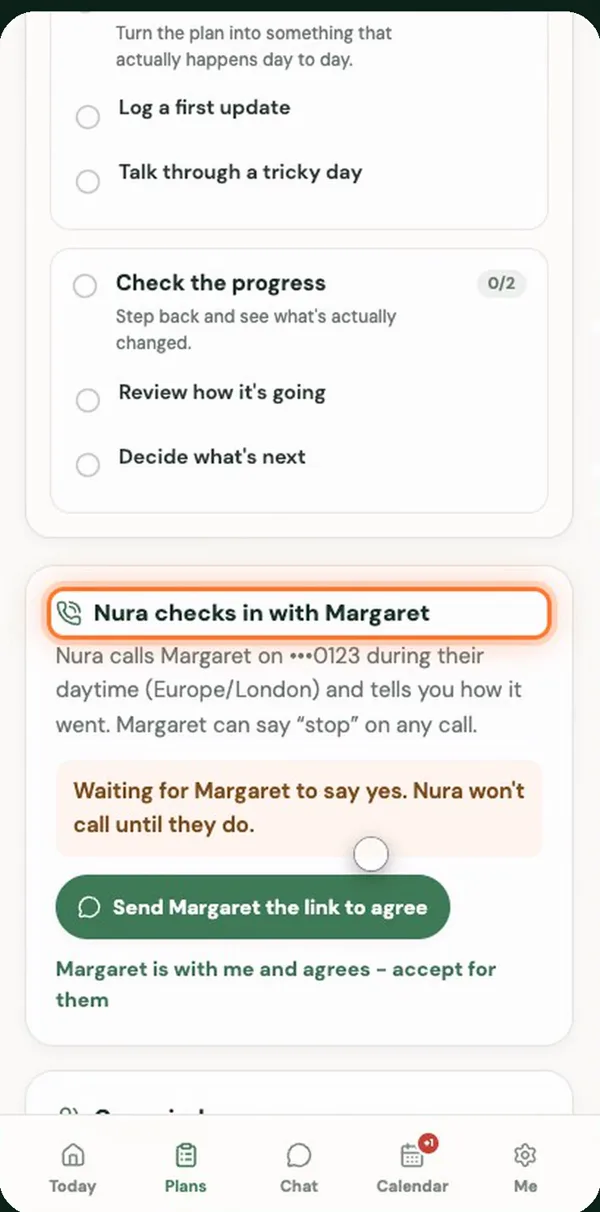
Nura isn't an alarm and can't detect or respond to a fall; for that, the NHS describes personal alarms and fall detectors. Where Nura helps is afterwards and in between: with your parent's agreement, it gives them a short call in their daytime and tells you how it went, so you hear about wobbles, a bruise or "a bit of a slip" sooner, and can keep the follow-up (a GP visit, a grab rail) on a Care plan the family shares.
Sources
General information, not medical advice. Nura does not diagnose, prescribe or replace your clinician. In an emergency call 999 (UK) or 911 (US); in the UK, NHS 111 can help if you need medical help but it isn't an emergency.