
Can my elderly parent still live alone? How to decide together
Many older people live alone safely, especially with the right support. The useful question isn't age but whether your parent can manage daily routines (washing, dressing, eating, medicines, getting out), stay reasonably safe, and get help quickly if something goes wrong. If the answer is "not quite", help at home, adaptations, alarms and regular contact often close the gap before a move is needed.
Why is this harder than it sounds?
Families often frame it as a yes-or-no choice between staying at home and moving to a care home, which makes the conversation feel enormous and frightening. In reality there's a wide middle ground. The NHS describes paid carers who visit for anything from an hour a week to several hours a day, home adaptations and equipment, and alarms and sensors that alert family. The decision is also your parent's, not yours, if they're able to make it.
Questions to work through together
Go through these with your parent rather than about them:
- Daily routines: can they wash, dress, get to the toilet and get in and out of bed without struggling?
- Food and drink: are they eating proper meals and drinking enough through the day?
- Medicines: are they taking them as prescribed, and getting repeat prescriptions in time?
- Safety: have there been falls or near misses? Are stairs, the bath or clutter a risk?
- Getting out: can they shop, get to appointments and see people?
- Company: do they talk to someone most days? The NHS notes older people are particularly at risk of loneliness if they live alone or don't have regular contact with others.
- Help in an emergency: if they fell tonight, how would anyone know?
What support helps an elderly parent keep living at home?
The NHS describes homecare (a paid carer visiting to help with things like getting up, washing, meals and remembering medicines), which it says costs from about £15 to £30 an hour depending on where you live, with the council sometimes contributing. It also covers personal alarms, monitoring systems and key safes, and home adaptations.
A council needs assessment is the starting point for council-funded help, and the NHS suggests it's worth having even if you plan to arrange care privately, because it helps you explain what's needed.
What should you do?
Have the conversation early
Talk before a crisis forces a decision. Ask what matters most to them about staying at home.
Look at a normal week
Use the questions above. Note what's going fine as well as what isn't, so the conversation isn't all about decline.
Fix the specific gaps
A grab rail, a shopping delivery, a weekly cleaner, a paid carer for mornings, or a personal alarm. Small fixes often make a big difference.
Get a needs assessment
Ask adult social services at their local council. It's free, and it tells you what support they may be entitled to.
Agree how you'll keep in touch
Regular contact is how you notice change early, and it's company as much as checking.
Review it every few months
Needs change. Agree to look at it again, especially after an illness, a fall or a hospital stay.
What tends not to work
Treating it as a single all-or-nothing decision.
Waiting for a fall or a hospital stay to start the conversation.
Deciding on your parent's behalf when they can decide for themselves.
Common questions
Is there an age when elderly people shouldn't live alone?
No. It depends on how someone is managing, not their age, and on what support is in place.
What if my parent wants to stay home but I think it's unsafe?
Share your specific concerns, suggest support that addresses them, and ask the council for a needs assessment. If they can make the decision, it's theirs to make.
Where Nura fits
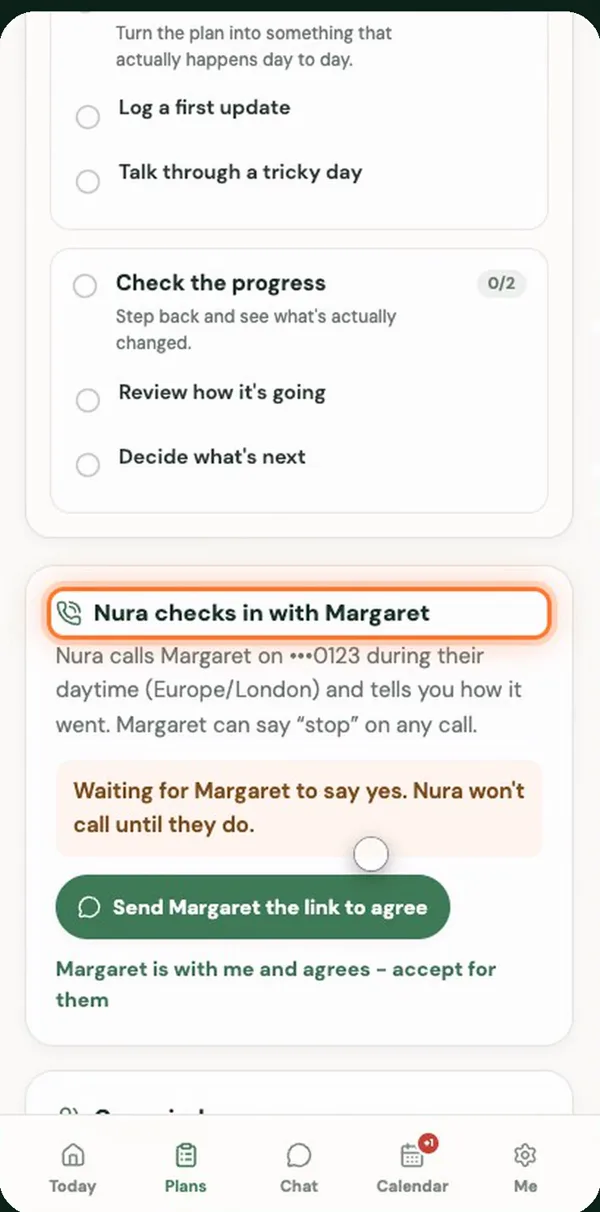
Nura helps with the keeping-in-touch part. With your parent's agreement, it gives them a short call in their daytime (only between 9am and 8pm their time) and tells you how it went, so you notice changes between your own calls and visits. You can invite a sibling to the same Care plan so you both see how things are going. It doesn't assess whether someone can live alone; that's a conversation for your family and, if needed, the council.
Sources
General information, not medical advice. Nura does not diagnose, prescribe or replace your clinician. In an emergency call 999 (UK) or 911 (US); in the UK, NHS 111 can help if you need medical help but it isn't an emergency.