
What is respite care, and how do you arrange it?
Respite care means taking a break from caring while the person you look after is cared for by someone else. It can be a volunteer sitting with them for a few hours, a day centre, a paid carer at home, family stepping in, a respite holiday, or a short stay in a care home. Councils fund it only after a needs assessment and a carer's assessment; otherwise charities may help, or you pay yourself.
Why is this harder than it sounds?
Many carers only think about respite when they're already exhausted, and then find short-notice places hard to get. The NHS says it can be difficult to get respite space at short notice but some care homes take advance bookings. Guilt also stops people: a break can feel like abandoning the person you care for, when it's actually what keeps the caring going.
What are the types of respite care?
The NHS lists the main types as:
- Day care centres, which offer company and activities, often with transport.
- Homecare from a paid carer, regularly (say one day a week) or for a short period such as a holiday.
- A short stay in a care home.
- Friends and family helping, either moving in for a while or having the person to stay.
- Respite holidays.
- Sitting services, where a trained volunteer keeps the person company for a few hours, often free or for a small charge.
Who pays for respite care?
Councils only pay for respite for people they've assessed as needing it, after a needs assessment and a carer's assessment, followed by a financial assessment. You can then ask the council to arrange it or do it yourself through a personal budget or direct payment. Some charities offer grants, and some services, such as sitting services, may be free.
Plan for an emergency, too
The NHS suggests thinking about who could step in if you suddenly couldn't be there, making sure they have keys or a key safe code, and leaving written notes about the care needed, including essential information about medicines and any dos and don'ts.
What should you do?
Get both assessments
A needs assessment for the person you care for and a carer's assessment for you. Even without council funding, the NHS says a needs assessment shows which kind of respite suits best.
Choose the kind of break
A regular few hours a week, a day centre, or a longer break for a holiday. Many carers need both.
Book ahead
Short-notice places are hard to find. Some care homes take advance bookings.
Write a care note
Routines, likes and dislikes, medicines, who to call. It makes handing over far less stressful.
Name an emergency back-up
Someone with a key who knows the basics and can step in for a few hours.
What tends not to work
Waiting until you're at breaking point.
Assuming respite only means a care home.
Keeping the care routine only in your head.
Common questions
How long can respite care last?
Anything from a few hours (a sitting service) to a short stay of days or weeks in a care home, depending on what's arranged.
Is respite care free?
Sometimes. Councils may pay after assessments and a means test, some charity services are free or low cost, and otherwise you pay.
Where Nura fits
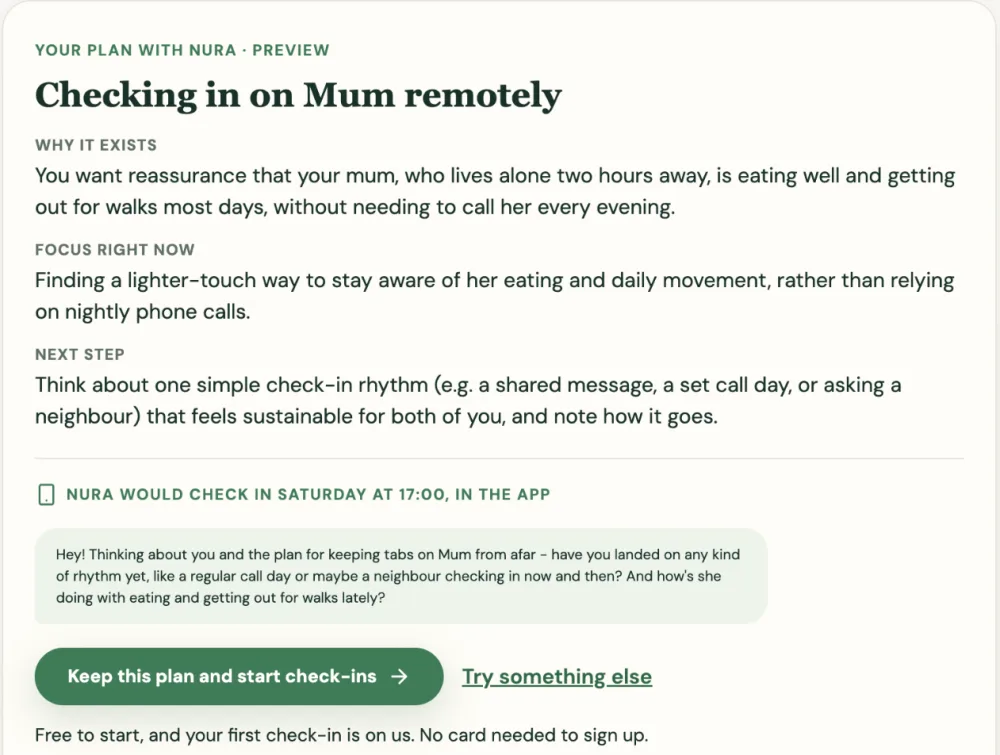
Nura can help keep things steady while you're away. A Care plan holds the notes and next steps, and you can invite whoever is stepping in so they see the same plan (never your private conversation with Nura). With the person's agreement, Nura can keep giving them a short call in their daytime and send the summary to you, so you can rest knowing someone has checked in.
Sources
General information, not medical advice. Nura does not diagnose, prescribe or replace your clinician. In an emergency call 999 (UK) or 911 (US); in the UK, NHS 111 can help if you need medical help but it isn't an emergency.