
Caregiver burnout: the signs, and what helps
Caregiver burnout is the physical and emotional exhaustion that builds when you've been looking after someone for a long time without enough rest or help. Common signs are constant tiredness, poor sleep, irritability, feeling low or numb, dropping your own friends and interests, and getting ill more often. What helps is real breaks (respite), sharing the caring, a free carer's assessment, and getting support for your own mood and sleep.
Why is this harder than it sounds?
Caring rarely starts as a decision. It grows from a lift to the shops into daily help, and because it happens gradually, many people don't think of themselves as carers or notice how much they've taken on. There's guilt about wanting a break, worry that nobody else will do it right, and no natural end point. The NHS describes respite as a way to stop carers becoming exhausted and run down, which tells you how common that is.
What are the signs of caregiver burnout?
Everyone's different, but carers describe:
- Feeling tired all the time, even after sleep, or not sleeping well.
- Being short-tempered with the person you care for, then feeling guilty.
- Feeling low, hopeless, numb or tearful.
- Giving up friends, exercise, hobbies or work you used to enjoy.
- Getting ill more often, or putting off your own health appointments.
- Dreading the next day, or feeling trapped.
When should you get help for yourself?
The NHS suggests seeing a GP if you're struggling to cope with stress, anxiety or low mood, have had a low mood for more than 2 weeks, or things you're trying aren't helping. In the UK you can also refer yourself to NHS talking therapies. If you ever feel you might harm yourself or the person you care for, get help straight away: call 999, or NHS 111 in the UK.
What should you do?
Call it what it is
Recognising you're a carer, and that you're running on empty, is the first step to getting help. The NHS counts emotional support and watching over someone as caring, not just physical help.
Ask for a carer's assessment
It's free for anyone over 18. It can recommend things like someone taking over so you can take a break, help with housework, or putting you in touch with support groups.
Plan regular breaks
Respite can be a few hours of a sitting service, a day centre, homecare, or a short stay in a care home. Book it before you're desperate.
Share the caring out
Write down what you do in a week and ask family or friends to take specific pieces, not "let me know if you need anything."
Protect one thing for you
A walk, a class, an hour with a friend. Put it in the diary like an appointment.
Look after your sleep and mood
Talk to your GP if it's getting on top of you. Your health matters to the person you care for too.
What tends not to work
Waiting until you're at breaking point to ask for a break.
Saying yes to every task because it's quicker to do it yourself.
Skipping your own health appointments.
Common questions
Is caregiver burnout the same as depression?
Not necessarily, but long-term exhaustion and low mood can overlap with it. If you've felt low for more than 2 weeks, the NHS suggests seeing a GP.
Can I get a break from caring?
Yes. Ask the council for a carer's assessment and a needs assessment for the person you care for; councils only fund respite for people they've assessed as needing it. Charities also run sitting services.
Where Nura fits
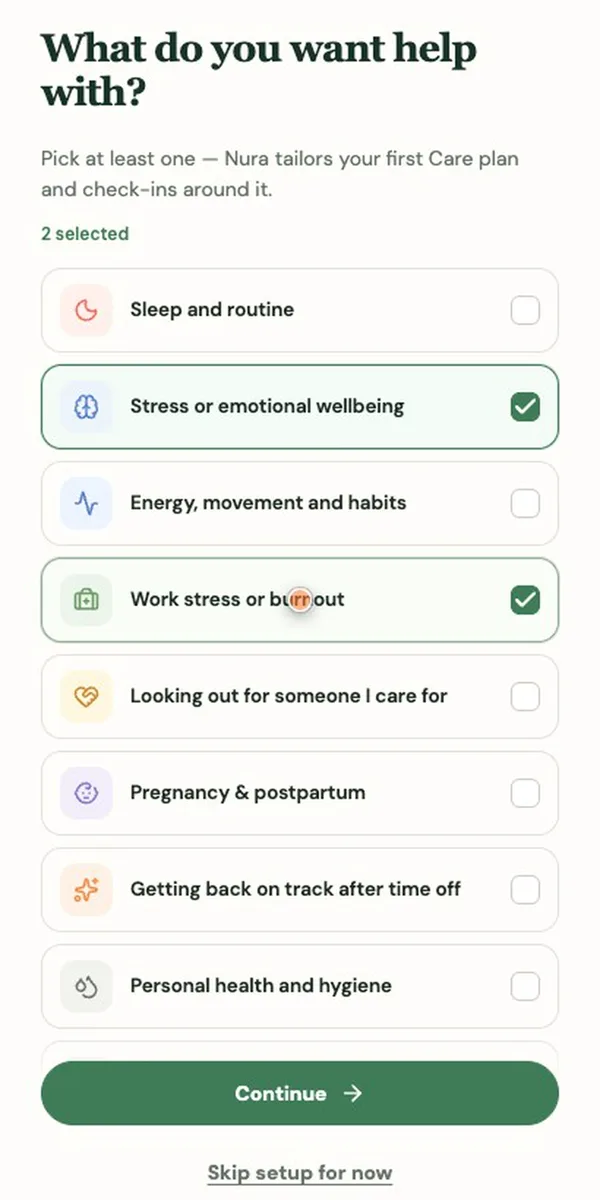
Nura can lighten two parts of it. For the person you look after, with their agreement, Nura gives them a short call in their daytime and tells you how it went, so you don't have to be the one ringing every day. For you, Nura can check in on your own sleep, stress and energy at a time you choose, and help you pick one small step on a hard week. If you mention thoughts of self-harm or that someone is in danger, it tells you to contact emergency or crisis services straight away.
Sources
General information, not medical advice. Nura does not diagnose, prescribe or replace your clinician. In an emergency call 999 (UK) or 911 (US); in the UK, NHS 111 can help if you need medical help but it isn't an emergency.