
Replika alternatives for wellbeing, not romance
If you want an AI that helps you look after yourself rather than an AI friend or partner, look for a wellbeing companion: one that keeps a plan around your sleep, stress or habits, checks in on you at times you choose, and is clear that it isn't therapy. Apps built around an ongoing relationship with an AI character are a different kind of product.
Why is this harder than it sounds?
"AI companion" now covers very different things. Replika describes itself as "the AI friend to do life with", and Nomi offers "a meaningful friendship", "a passionate relationship" or "an insightful mentor" (their own home pages, read 19 Nov 2026). That suits some people. Others want something closer to a coach: a nudge to get to bed, a check on a stressful week, and a push back toward real people, which the NHS's 5 steps to mental wellbeing put first.
How to tell the two kinds apart
- Relationship companions centre on the character: its personality, memories of you and ongoing conversation.
- Wellbeing companions centre on you: a plan, check-ins about it, and progress over weeks.
- Ask: does it come back to me about something specific, or wait for me to chat?
- Ask: does it encourage time with people, or more time in the app?
- Ask: is it clear about privacy and that it isn't therapy or an emergency service?
What should you do?
Name what you want help with
Sleep, stress, energy, a habit, or looking out for someone.
Check how it reaches you
In-app only, or WhatsApp and calls you'll actually notice.
Read what it does with your data
Look for plain answers on AI providers, recordings and deleting your data.
Try before you commit
Use any no-sign-up demo or free trial, and note whether the check-ins help after a week.
Keep people in the picture
A good companion should make it easier to talk to people, not replace them.
What tends not to work
Choosing on personality features if what you want is routine help.
Apps that never say what happens to your conversations.
Using any AI app as your crisis plan.
Paying before you've seen a real check-in.
Common questions
Is there an AI companion that isn't romantic?
Yes. Wellbeing companions such as Nura focus on routines, stress and check-ins rather than a relationship with a character.
Can an AI companion replace therapy?
No. If you're struggling, speak to your GP or use the NHS's urgent mental health help page. A companion can help with day-to-day routines alongside that.
Which is better, Replika or a wellbeing app?
It depends on what you want. For conversation with an AI character, a relationship companion is built for that. For help sticking to sleep, stress or habit plans, a check-in companion is a better fit.
Where Nura fits
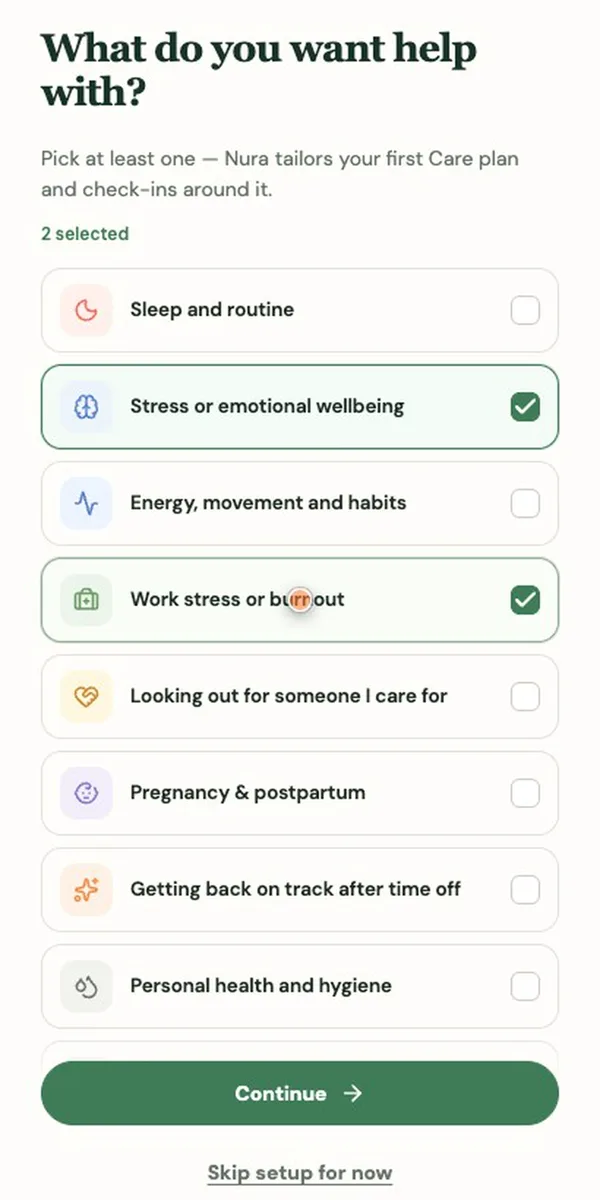
Nura is a wellbeing companion, not a character or a relationship app. It keeps a simple Care plan around your sleep, stress, energy, routines and the people you look out for, and checks in at the times you choose, in the app, on WhatsApp or with a short call. It asks your permission before anything you share goes to an AI model, and doesn't sell your data or use it for ads. Try the planner on the home page with no account; Nura Plus is US$9.99 a month after a 14-day free trial. Nura is a wellbeing companion, not therapy or an emergency service. If you're struggling to cope or in crisis, the NHS lists where to get urgent help, and Samaritans are on 116 123 in the UK at any time (call or text 988 in the US).
Sources
General information, not medical advice. Nura does not diagnose, prescribe or replace your clinician. In an emergency call 999 (UK) or 911 (US); in the UK, NHS 111 can help if you need medical help but it isn't an emergency.