
A healthy daily routine for elderly parents
A good daily routine for an older person has regular meals and drinks, some movement every day (with strength and balance activities at least twice a week), time with other people, something to look forward to, and a regular bedtime and wake-up time. Build it around what your parent enjoys and already does, rather than a timetable imposed on them.
Why is this harder than it sounds?
Routines quietly fall apart when someone retires, is bereaved, or lives alone: meals get skipped, days blur together, and weeks go by with little contact. The NHS notes older people are particularly at risk of loneliness if they live alone, and that people aged 65 and over are particularly at risk of malnutrition. A gentle routine protects against both.
Sample daily schedule for an older adult
Adapt it to your parent's own rhythm:
- Morning: get up at a regular time, breakfast and a drink, any morning medicines, open the curtains and get some daylight.
- Mid-morning: a short walk, gardening or a few strength and balance exercises; a call with family or a friend.
- Lunch: a proper meal, ideally with company some days (a lunch club, a neighbour, a video call).
- Afternoon: something they enjoy: a hobby, a group, a class, volunteering, a visitor. A drink.
- Evening: an easy meal, a phone call, some wind-down time.
- Bedtime: regular time, after an hour of relaxing.
What the NHS recommends for activity
The NHS says adults aged 65 and over should aim to be physically active every day, even if it's light activity like moving around the home, do activities that improve strength, balance and flexibility on at least 2 days a week, aim for 150 minutes of moderate activity a week, and break up long periods of sitting. It suggests speaking to a GP first if someone hasn't exercised for a while or has medical conditions.
What should you do?
Ask what a good day looks like for them
Start from their preferences and existing habits.
Anchor the day
Regular wake-up time, meals and bedtime give the rest of the day its shape.
Add movement and company
One bit of each every day, and one outing or visitor to look forward to each week.
Write it down simply
A weekly planner on the fridge helps, especially for appointments and visits.
Fit in family contact
A regular call time becomes part of the routine, and a way to notice if things change.
What tends not to work
A rigid timetable your parent didn't choose.
Filling every hour; rest matters too.
Days with no contact with anyone.
Common questions
Why is routine important for elderly people?
Regular meals, movement, sleep and contact help people stay well and make it easier to notice when something changes.
How much exercise should an elderly person do?
The NHS says adults 65 and over should be active every day, do strength and balance activities on at least 2 days a week, and aim for 150 minutes of moderate activity a week.
Where Nura fits
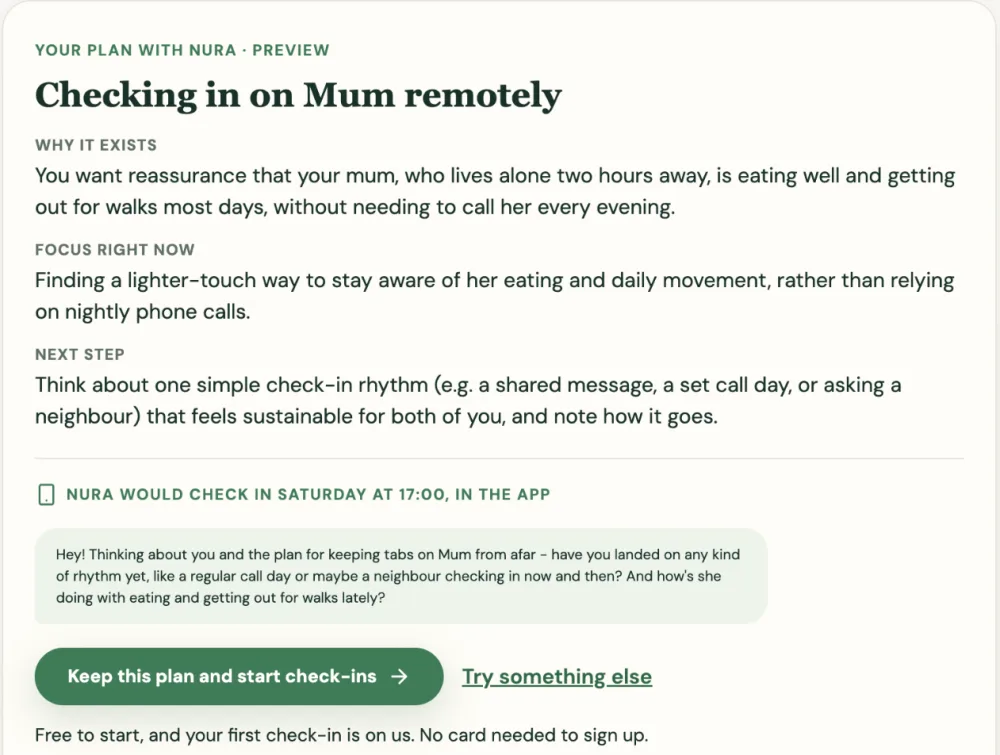
With your parent's agreement, Nura can become one of the regular moments in their day: a short, friendly call at a time that suits them (only between 9am and 8pm their time) that asks how they're getting on, for example with meals and getting out for a walk, and tells you how it went. Nura doesn't set or enforce routines; it helps everyone notice how they're going.
Sources
General information, not medical advice. Nura does not diagnose, prescribe or replace your clinician. In an emergency call 999 (UK) or 911 (US); in the UK, NHS 111 can help if you need medical help but it isn't an emergency.