
Care plan example for an elderly parent (free template)
Below is a worked example for a fictional parent, "June, 81, lives alone, two hours from her children." It has six parts: about June, what she manages herself, the weekly help and who gives it, staying in touch, contacts and emergencies, and the review date. Copy the headings and replace the details with your own.
Why is this harder than it sounds?
Blank templates are easy to find but hard to fill in, because it isn't obvious how much detail to give or what "needs" should look like in practice. A worked example shows the level of detail that's actually useful: specific enough that a sibling or neighbour could step in, short enough to stay up to date.
1. About June
June, 81, widowed, lives alone in her own house. Loves her garden, the Thursday lunch club and phone calls with her grandchildren. Prefers mornings; tired by late afternoon. Doesn't want carers in the house every day, and wants to keep doing her own cooking for as long as she can.
2. What June manages herself
- Washing and dressing, cooking simple meals, light housework.
- Taking her tablets from a weekly pill organiser her pharmacy fills.
- Walking to the corner shop on good days.
3. Weekly help, and who gives it
- Online grocery delivery, Monday: daughter Sam orders it.
- Cleaner, Wednesday morning: paid privately.
- Lunch club, Thursday: neighbour Pat gives her a lift.
- Visit, every other Saturday: son Dev, alternating with Sam.
- Repeat prescription: ordered online by Sam, delivered by the pharmacy.
4. Staying in touch
- Short call most mornings around 10am: Sam on weekdays, Dev at weekends.
- Video call with the grandchildren on Sunday afternoons.
- If June sounds unwell, low, or mentions a fall: the caller tells the family group the same day.
5. Contacts and emergencies
- GP practice, pharmacy and council adult social services numbers.
- Neighbour Pat has a key; there's also a key safe (code shared with family only).
- June wears a pendant alarm that alerts Sam's and Dev's phones.
- If June doesn't answer by midday: try again, then ask Pat to knock. If no answer, call 999.
6. Review
Look again in three months, or sooner after any fall, illness or hospital stay. If June starts struggling with washing, meals or getting out, ask the council for a needs assessment.
What should you do?
Copy the six headings
About them; what they manage; weekly help and who; staying in touch; contacts and emergencies; review.
Fill it in together
Use their words for what matters to them.
Be specific
Days, times and names. "Someone checks in" isn't a plan; "Sam calls at 10am weekdays" is.
Agree the 'no answer' plan
It's the part families most often skip, and the part that matters most on a bad day.
Share one version
Everyone works from the same copy, and you update it in one place.
What tends not to work
Copying a clinical template full of jargon. Families need plain language.
Leaving out what the person can still do.
Letting it go out of date after the first month.
Common questions
What should be in a care plan for an elderly person living at home?
What matters to them, what they manage themselves, the help they get and who gives it, how family keeps in touch, contacts and an emergency plan, and a review date.
Can I use this as a council care plan?
No. It's a family plan. Council care and support plans follow a needs assessment and are written by the council.
Where Nura fits
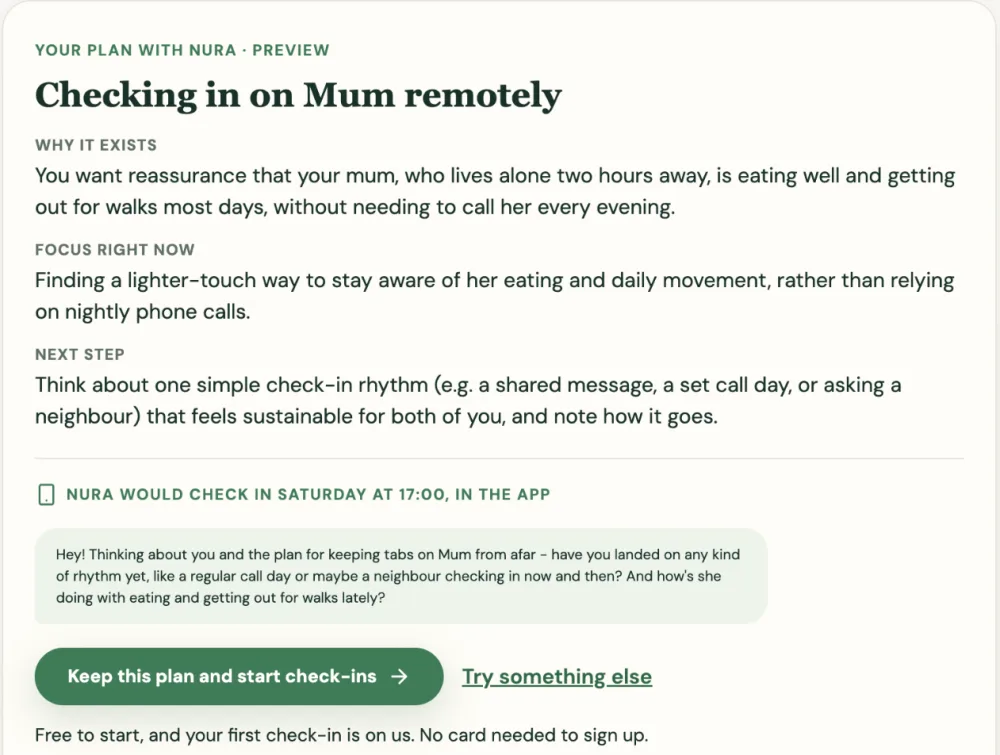
You can write a plan like June's in Nura by describing the situation in a sentence or two; Nura drafts a Care plan with next steps and check-ins that you can change, and you can invite your siblings to see it. With your parent's agreement, Nura can also take one of the "staying in touch" calls: a short call in their daytime, with a summary sent to you afterwards. It doesn't replace a council care and support plan.
Sources
General information, not medical advice. Nura does not diagnose, prescribe or replace your clinician. In an emergency call 999 (UK) or 911 (US); in the UK, NHS 111 can help if you need medical help but it isn't an emergency.