
How to help a lonely elderly parent
Make contact regular and predictable, help them find one or two things to look forward to each week (a group, a class, a lunch club, a volunteer role), and introduce befriending services if they'd like more company. Keep an eye on mood too: if they've been low for more than two weeks, the NHS suggests seeing a GP.
Why is this harder than it sounds?
Loneliness is common and often hidden. The NHS says older people are particularly at risk if they live alone or don't have regular contact with others, and lists retirement, illness, bereavement and moving as common causes. Many parents won't say they're lonely, because they don't want to worry you or feel a nuisance. And you can't fill every gap yourself, especially from a distance.
What the NHS suggests for older people
For older people who feel lonely, the NHS suggests things like:
- Keeping in touch by phone or video chat.
- Joining local groups, classes or community activities.
- Starting small conversations when out, for example in shops.
- Inviting someone over, even for a short visit.
- Planning things to look forward to and putting them in the diary.
- Volunteering.
- Support and befriending services from organisations such as Age UK, The Silver Line or Re-engage.
How can you tell if it's more than loneliness?
The NHS suggests seeing a GP if someone is struggling to cope with stress, anxiety or low mood, has had a low mood for more than 2 weeks, or things they're trying aren't helping. In the UK, people can also refer themselves to NHS talking therapies. If someone needs immediate help, call 999.
What should you do?
Make contact a routine
A call at the same time each week, or a short daily message, gives them something to count on. Predictable beats occasional long calls.
Find one regular outing
A lunch club, day centre, walking group, faith group or class. Offer to go along the first time.
Widen the circle
Ask grandchildren, siblings, old friends and neighbours to call or drop in. Share a simple rota.
Try befriending
Telephone and visiting befriending services exist for exactly this. Your parent chooses whether to try one.
Help with the tech, if they want it
Set up video calls on a device they're comfortable with. The NHS suggests using technology to stay in touch, but not relying on it alone.
Watch mood over time
Note if they sound flat for weeks, stop doing things they enjoyed, or talk about not seeing the point. Encourage a GP visit.
What tends not to work
Telling them to "just get out more" without helping them find somewhere to go.
Long gaps followed by guilt-driven marathon calls.
Assuming a busy-sounding parent isn't lonely.
Common questions
How often should I call a lonely elderly parent?
Agree it with them. A predictable rhythm, even a short call at the same time each week, often helps more than occasional long calls.
Are there free services for lonely older people in the UK?
Yes. The NHS points to support and befriending from organisations including Age UK, The Silver Line and Re-engage.
Where Nura fits
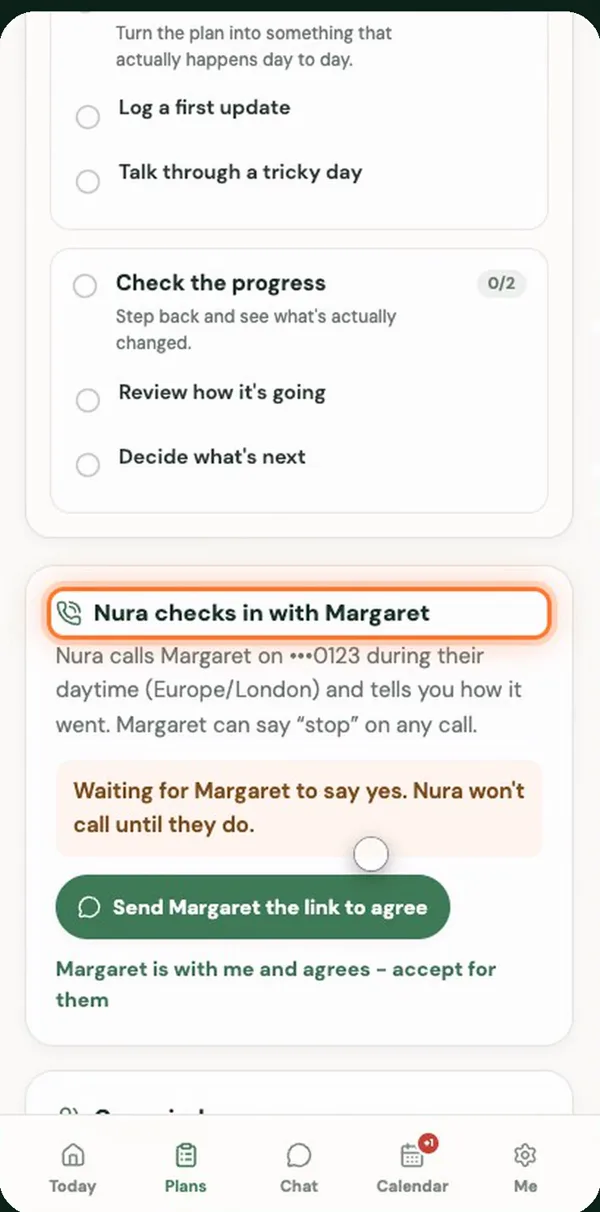
Nura can add a friendly, regular call to the mix. Once your parent says yes on a link you send, Nura calls them in their daytime, asks how things are going and listens, then tells you how it went, so you know how they're really doing and what to talk about next time you ring. It isn't a replacement for family or friends, and your parent can say "stop" on any call.
Sources
General information, not medical advice. Nura does not diagnose, prescribe or replace your clinician. In an emergency call 999 (UK) or 911 (US); in the UK, NHS 111 can help if you need medical help but it isn't an emergency.