
Elderly parent not eating enough? What you can do
Find out why first: it might be appetite, loneliness, difficulty shopping or cooking, dental or swallowing problems, low mood, or something medical. Then make eating easier (smaller, more frequent meals and snacks, easy food in the house, company at mealtimes) and encourage them to see a GP if they're losing weight without trying, which the NHS lists as one of the main signs of malnutrition.
Why is this harder than it sounds?
Eating less can creep up slowly and is easy to miss from a distance. Your parent may say "I'm just not hungry" or "I had a big lunch." The NHS says people aged 65 and over are particularly at risk of malnutrition, that weight loss is not an inevitable part of ageing, and that it's more common in people who are socially isolated, have limited mobility or a low income. So it's often as much about circumstances as appetite.
What signs should you look out for?
The NHS lists these among the common signs of malnutrition:
- Unintentional weight loss (it says losing 5% to 10% or more of weight over 3 to 6 months is one of the main signs). Loose clothes, rings or dentures can be a clue.
- A lack of interest in eating and drinking.
- Feeling tired all the time, or weak.
- Getting ill often and taking a long time to recover.
When should they see a GP?
The NHS says to see a GP if someone has unintentionally lost a lot of weight over the last 3 to 6 months, has other signs of malnutrition, or if you're worried someone in your care may be malnourished. If you're concerned about a family member, it suggests encouraging them to go. A GP can check their weight and ask about appetite and any medical problems.
What should you do?
Ask, gently, what's changed
Is cooking a chore? Is shopping hard? Do they not fancy eating alone? Are their teeth or dentures sore? The answer tells you what to fix.
Make food easy
Stock things that need little preparation, set up a supermarket delivery, or look at meal services. The NHS's first dietary advice for malnutrition includes snacking between meals.
Add company to meals
Eat together when you visit, share a video call over lunch, or look into lunch clubs and day centres.
Don't forget drinks
The NHS says most people should drink enough that their pee is a clear pale yellow, and that not eating and drinking enough can make you feel lightheaded or faint.
Notice the trend
Keep a simple note of what you hear: "skipped lunch again", "had soup". A pattern over a few weeks is more useful than one bad day.
Encourage a GP visit if weight is dropping
Offer to go with them, or help them book it.
What tends not to work
Turning every call into an interrogation about food.
Assuming eating less is just part of getting old.
Changing their diet or adding supplements without advice from a GP, nurse or dietitian.
Common questions
Why do elderly people stop eating?
Common reasons include reduced appetite, loneliness, difficulty shopping or cooking, mouth or swallowing problems, low mood and medical conditions. The NHS notes malnutrition is more common in people who are isolated, have limited mobility or a low income.
What if my parent stops eating and drinking altogether?
That needs medical help promptly. Call their GP, or NHS 111 in the UK, and 999 if they're very unwell.
Where Nura fits
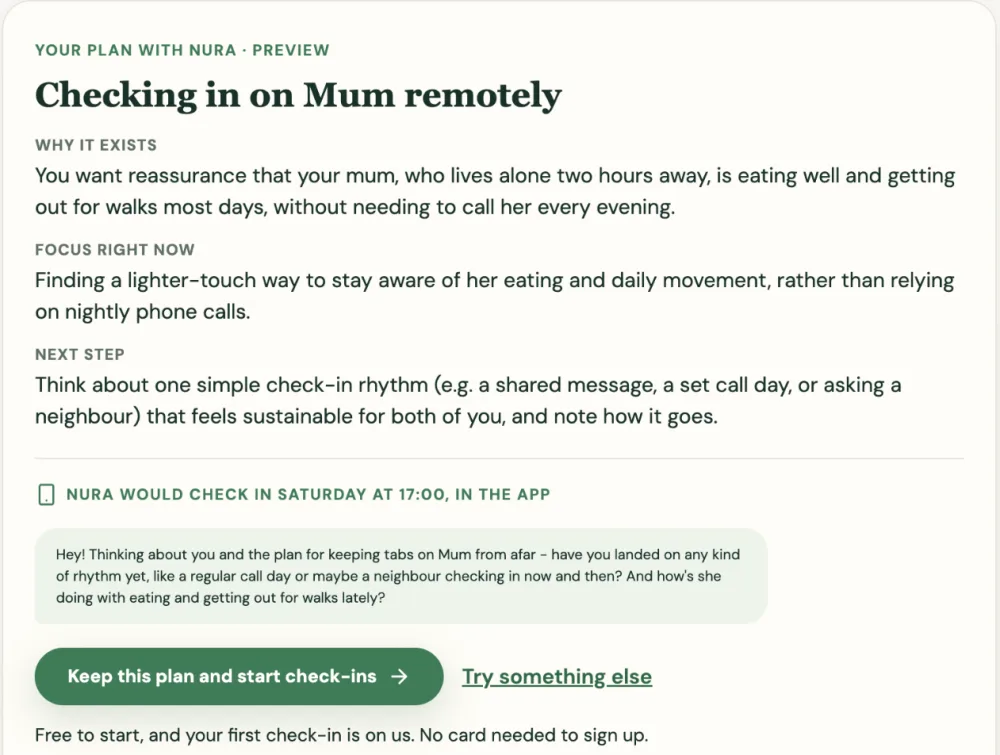
If you're far away, Nura can help you notice. With your parent's agreement, it gives them a short call in their daytime and you can set the plan around what you want to know, for example whether they're eating properly and getting out. You get a short summary after each call, so you see the pattern over weeks rather than guessing from one phone call. Nura doesn't assess nutrition or give medical advice; if you're worried about weight loss, the next step is their GP.
Sources
General information, not medical advice. Nura does not diagnose, prescribe or replace your clinician. In an emergency call 999 (UK) or 911 (US); in the UK, NHS 111 can help if you need medical help but it isn't an emergency.