
Care plan review: questions to ask and how to prepare
A care plan review checks what's working, what isn't, and whether the support is still right. Bring specific examples (dates when visits were late or missed, things that have got harder) and ask: is the plan still meeting their needs, what's changed, is the budget right, what happens next, and who do we call in between. The NHS says reviews usually happen in the first few months and then yearly, and you can ask for one at any time.
Why is this harder than it sounds?
Reviews often come round when nobody has prepared, and they turn into a quick "everything OK?" that changes nothing. Meanwhile families have spent months noticing small problems that never got written down. A little preparation turns a review into the moment things actually improve.
Questions to ask at a care plan review
- Is the support in the plan actually happening, at the times it says?
- What's got harder since the last review, and what's got easier?
- Are the person's own goals and preferences still reflected?
- Is any equipment not working for them?
- Is the personal budget or direct payment enough for what's needed?
- Is the carer coping? (If not, ask for a carer's assessment or a review of it.)
- Who do we contact if things change before the next review?
- When is the next review?
When should you ask for a review early?
The NHS says you can call adult social services and ask for a review at any time if you're unhappy with the care. Good reasons include visits being late, short or missed; a fall, illness or hospital stay; the person's needs changing; or the carer no longer being able to keep up.
What should you do?
Re-read the current plan
Note what it says should happen.
Gather examples
Dates and specifics from the last few months. A short log is ideal.
Ask the person what they think
Their view should lead the review.
Write your questions down
Use the list above and add your own.
Have someone with you
A relative to take notes, or an advocate if explaining things is hard.
Get the outcome in writing
Ask for the updated plan and the next review date.
What tends not to work
Arriving without examples.
Leaving out the carer's side of things.
Leaving without knowing what changes and when.
Common questions
How often should a care plan be reviewed?
The NHS says usually within the first few months of support starting and then once a year, and you can ask for one at any time.
What if I disagree with the outcome of a review?
Use the council's complaints procedure, and if you're still unhappy, the Local Government and Social Care Ombudsman.
Where Nura fits
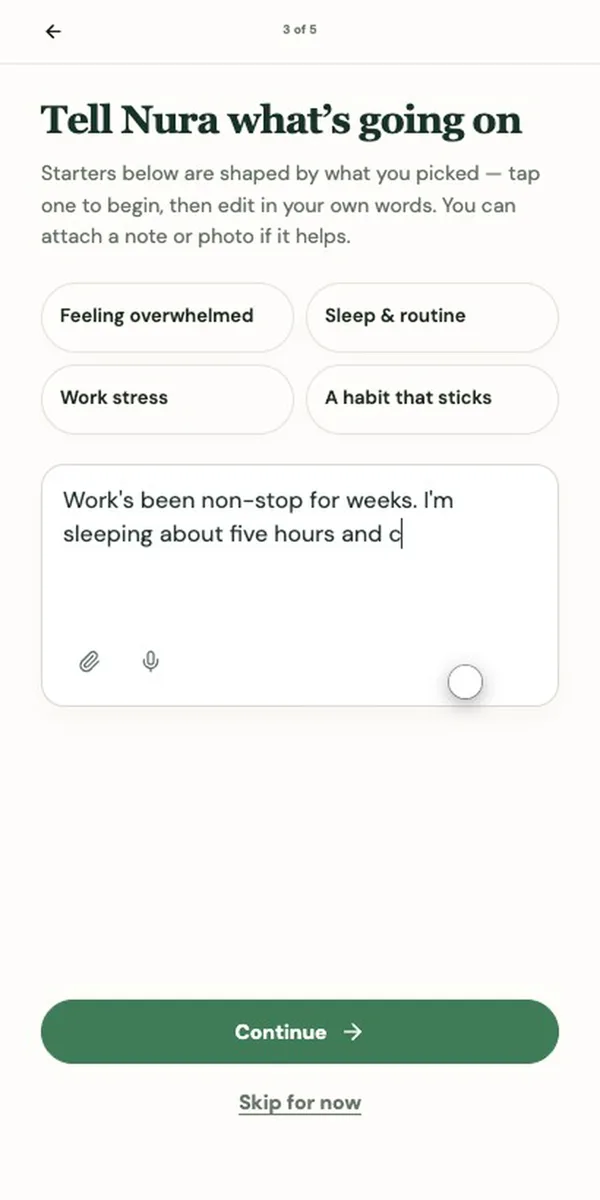
Nura makes the log easy. Tell it how things went in a sentence or a voice note and it keeps your notes in a Care plan; if your parent agrees to calls, Nura gives them a short call in their daytime and sends you a summary each time. By the review you have a record of how things have actually been going, not just a memory of the last bad week.
Sources
General information, not medical advice. Nura does not diagnose, prescribe or replace your clinician. In an emergency call 999 (UK) or 911 (US); in the UK, NHS 111 can help if you need medical help but it isn't an emergency.