
Care plan for an elderly parent at home: where to start
Most families need two things: a council care and support plan if your parent needs practical help (which starts with a free needs assessment), and a simple family plan that covers everything else, such as who visits, who calls and what happens if no one can reach them. Start by asking your parent what they want, then request the needs assessment if they're struggling with daily routines.
Why is this harder than it sounds?
When a parent starts needing more help at home, families are suddenly juggling councils, agencies, GP surgeries and each other. The council plan covers the support it arranges, but not who rings Mum on Tuesday or what to do if she doesn't answer. Without both pieces, things fall through the gaps.
How do you get a care plan from the council?
Ask adult social services at your parent's local council for a needs assessment. It's free and anyone can ask. If your parent is eligible for support, the council writes a care and support plan, and you should get a copy within a few weeks. A financial assessment (means test) works out whether your parent pays towards it. If you help them, you can ask for a carer's assessment for yourself at the same time.
What does a care plan for an elderly person at home usually cover?
The NHS says a council care and support plan should cover what's important to the person, what they can still do, the care and equipment they need and how and when it happens, what family and friends think, who to contact, and the personal budget. A family plan adds the everyday detail: routines, who does what, staying in touch, and the emergency plan.
What should you do?
Talk to your parent
What do they want help with, and what do they want to keep doing themselves?
Request a needs assessment
If they're finding washing, dressing, meals or getting out hard, contact adult social services.
Prepare with real examples
The NHS notes that leaving things out might reduce the care recommended, so describe a normal day honestly.
Write the family plan alongside
Who calls, who visits, who handles prescriptions, and the plan if no one can reach them.
Keep a short log
When help turns up, what's going well and what isn't. It makes reviews far more useful.
Ask for a review when things change
Don't wait for the yearly review if visits are being missed or needs have changed.
What tends not to work
Assuming the council plan covers everything families need to coordinate.
Leaving things out of the assessment because they seem minor.
Filing the plan and never checking it against what's happening.
Common questions
Who writes a care plan for an elderly person at home?
The council writes a care and support plan after a needs assessment if support is needed. Families often keep their own plan for everything else.
How long does it take to get a council care plan?
The NHS says you should get a copy of your care and support plan within a few weeks of the assessment.
Where Nura fits
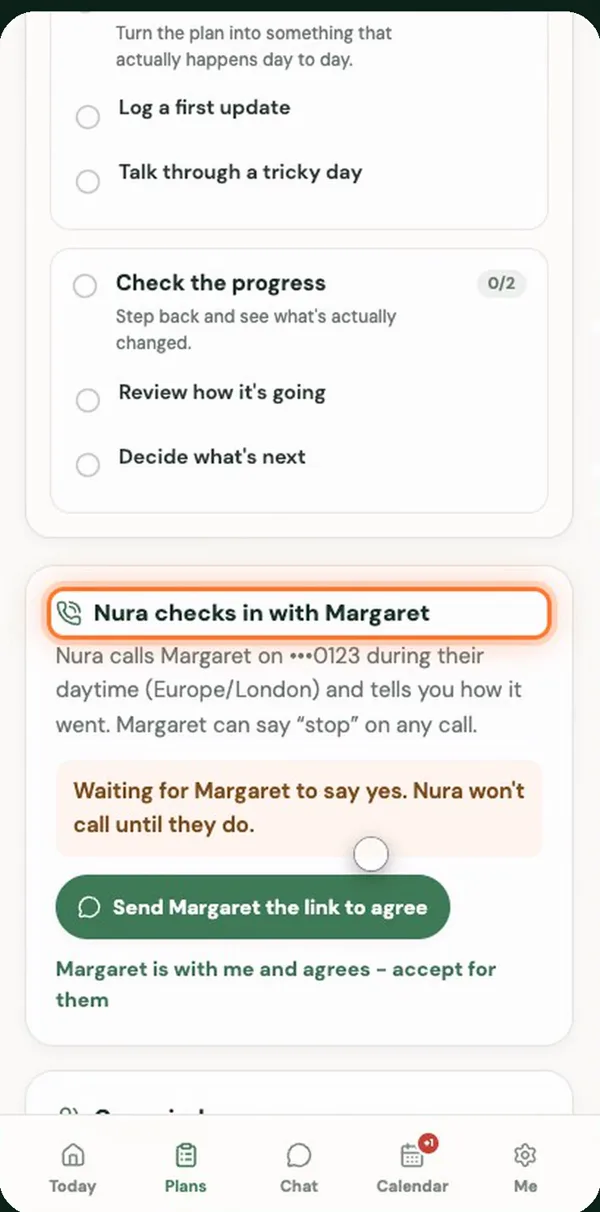
Nura helps with the family side and with noticing how things are actually going. You can keep notes and next steps in a Care plan, invite siblings to the same plan, and, with your parent's agreement, have Nura give them a short call in their daytime and tell you how it went. You can also tell Nura what the council plan says, or attach a photo of it, and Nura checks in with you on whether the support is happening. It isn't a council care plan and doesn't arrange care.
Sources
General information, not medical advice. Nura does not diagnose, prescribe or replace your clinician. In an emergency call 999 (UK) or 911 (US); in the UK, NHS 111 can help if you need medical help but it isn't an emergency.