
Am I a carer? What counts as caring for someone
You're a carer if you regularly look after someone because they're ill, older or disabled, and that includes family. It isn't only washing and dressing: the NHS counts help with medicines, getting to appointments, shopping, cleaning, bills and finances, and emotional support such as keeping someone company or watching over them. Recognising it matters, because it opens up a free carer's assessment and other support.
Why is this harder than it sounds?
Most people think of themselves as a daughter, son, partner or friend, not a carer, so they don't look for help that's meant for them. Caring often grows slowly from a few favours into a big part of every week. By the time people realise, they're often exhausted.
What counts as caring?
The NHS says carers help with things like:
- Washing, dressing or taking medicines.
- Getting out and about, and travelling to appointments.
- Shopping, cleaning and laundry.
- Paying bills and organising finances.
- Emotional support: sitting with someone to keep them company, or watching over someone who can't be left alone.
What support is there for carers?
In England, the starting point is a free carer's assessment from your local council, which can lead to things like breaks, practical help and support groups, and a care and support plan if you qualify. The NHS also covers carers' breaks and respite, and benefits for carers. If you work, it's worth telling your employer, as many have carer policies.
What should you do?
Write down what you do
Everything for a week, including phone calls, worry, paperwork and lifts. It's usually more than you think.
Tell people
Your GP practice (so they know you're a carer), your employer, and close friends.
Ask for a carer's assessment
Contact adult social services at your local council. It's free for anyone over 18.
Find local support
Carers' centres and charities run groups and helplines. The NHS lists free helplines from Carers UK, Age UK and Independent Age.
Plan one break
Even a few hours a week through a sitting service or a relative makes a difference.
What tends not to work
Thinking it doesn't count because it's your mum or your partner.
Thinking it doesn't count because you live elsewhere. Organising care, managing money and regular check-ins are caring too.
Waiting until you're exhausted to look for support.
Common questions
Do I have to live with someone to be their carer?
No. Helping someone regularly from a distance, with things like finances, appointments or emotional support, can still make you a carer.
Do I have to be paid to be a carer?
No. Most carers are unpaid family members or friends.
Where Nura fits
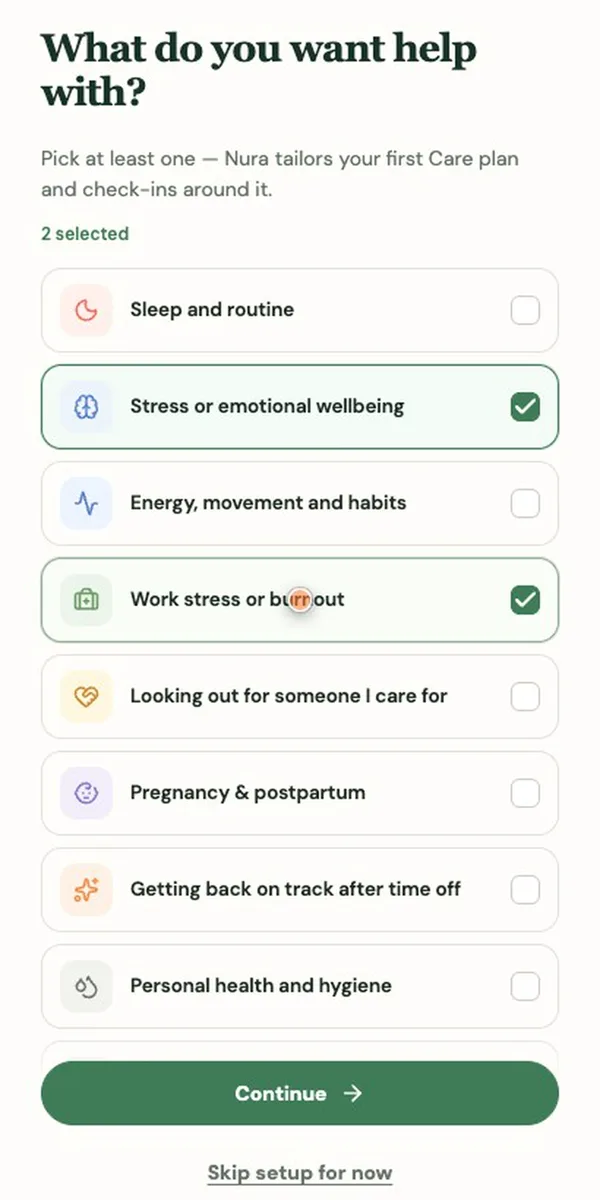
Nura is built for people looking out for someone as well as themselves. You can start a Care plan about the person you help; with their agreement, Nura gives them a short call in their daytime and tells you how it went, and you can invite family to see the same plan. Nura can also check in on you: caring is health and wellbeing too.
Sources
General information, not medical advice. Nura does not diagnose, prescribe or replace your clinician. In an emergency call 999 (UK) or 911 (US); in the UK, NHS 111 can help if you need medical help but it isn't an emergency.