
Wellbeing check-in questions to ask yourself or someone else
Good wellbeing check-in questions are short, open and specific: "How did you sleep?", "What's taking up most of your headspace?", "What's one thing that went well today?", "What would make tomorrow a bit easier?" Ask at a regular time, listen more than you advise, and watch for change over weeks rather than reading too much into one answer.
Why is this harder than it sounds?
"How are you?" almost always gets "fine". Specific questions are easier to answer honestly, and a regular rhythm makes it normal rather than a sign something's wrong. The NHS's 5 steps to mental wellbeing include asking people how they are and really listening to their answer.
Questions to check in with yourself
- How did I sleep, and how's my energy?
- What's on my mind most today?
- Have I eaten properly and moved at all?
- Who have I talked to today?
- What went well, even something small?
- What's one thing I can do to make tomorrow easier?
Questions to ask a friend, partner or colleague
- How are you really doing this week?
- What's been the hardest bit lately?
- How are you sleeping?
- Is there anything you're dreading?
- Is there anything I can take off your plate?
Questions to ask an older parent
- What have you been up to today?
- Have you managed to get out for a walk?
- What did you have for lunch?
- Have you spoken to anyone today?
- Is there anything you need from the shops or anything that's been tricky?
- What are you looking forward to this week?
What should you do?
Pick a regular time
Same time each day or week. A rhythm makes it ordinary.
Use two or three questions
Not a questionnaire. Rotate them so it doesn't feel scripted.
Listen first
Resist jumping to advice. "That sounds hard" often opens more than a fix.
Notice the trend
Keep a light note. A run of poor sleep or no contact with anyone matters more than one off day.
Know when to get help
If low mood lasts more than 2 weeks, the NHS suggests seeing a GP. If someone is in immediate danger, call 999.
What tends not to work
Only checking in when you're already worried.
Firing off questions like a form.
Fixing instead of listening.
Common questions
How often should you do a wellbeing check-in?
Whatever you'll keep up. Daily works for a short self check-in; weekly is common with friends or family.
What's a good first question for a wellbeing check-in?
Something specific and easy to answer, like "How did you sleep?" or "What's on your mind today?"
Where Nura fits
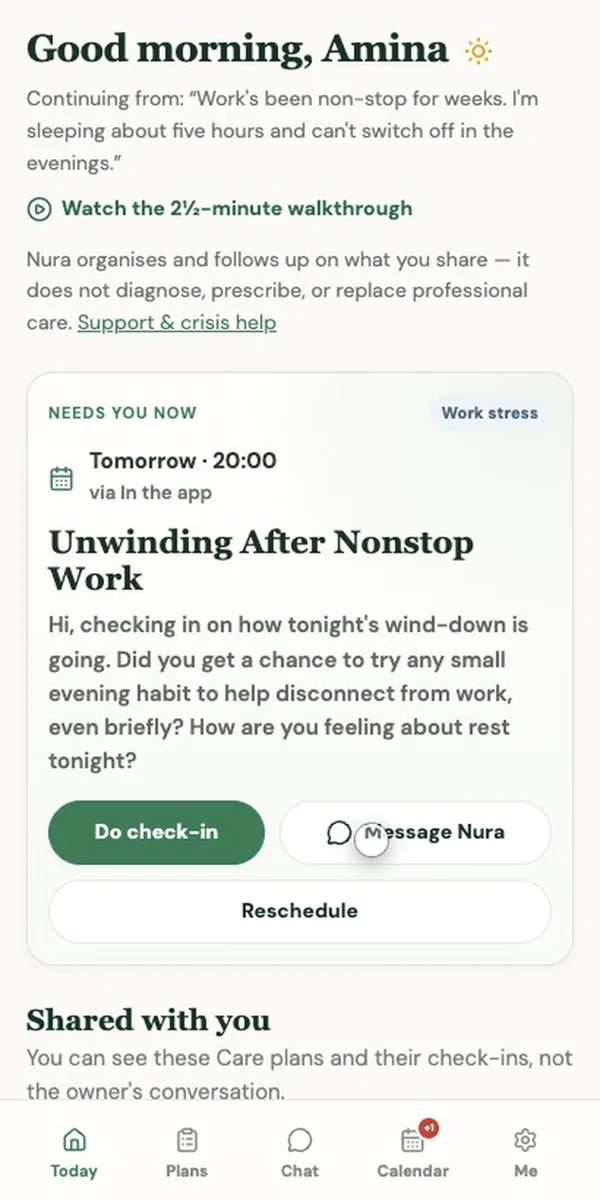
This is what Nura does. It checks in at times you choose, in the app, on WhatsApp or with a short call, asks a few specific questions based on what you told it matters (sleep, stress, energy, a habit), and remembers your answers so the next check-in follows on. You can also start a Care plan for someone you look out for; with their agreement, Nura calls them in their daytime and tells you how it went.
Sources
General information, not medical advice. Nura does not diagnose, prescribe or replace your clinician. In an emergency call 999 (UK) or 911 (US); in the UK, NHS 111 can help if you need medical help but it isn't an emergency.