
Pill reminders for elderly people: boxes, alarms, dispensers and calls
The main options are a pill organiser or dosette box (often filled by the pharmacy), an alarm or automatic dispenser that beeps and opens at the right time, a reminder call from family or a service, a carer visiting at medicine times, and phone or app reminders. The NHS suggests asking a pharmacist which would suit, since not every medicine can go in a dosette box.
Why is this harder than it sounds?
Forgetting tablets is common, especially with several medicines at different times of day. But the right reminder depends on the person: an app is no use to someone who doesn't use a smartphone, and a beeping dispenser can be confusing for some. Older people also have a right to decide how involved family are in their medicines; the NHS notes the person you care for has a right to confidentiality.
What does the NHS suggest when someone keeps forgetting?
For people who often forget their medicines, the NHS suggests:
- Telephoning them when they need to take their medicine.
- Arranging for care workers to visit at medicine times.
- An automatic pill dispenser that beeps and opens to the right pills at the right time.
- Asking a pharmacist about dosette boxes and other reminders.
- Asking the GP surgery about a structured medication review if they take several medicines.
Which reminder suits which person?
- Comfortable with routine, just forgets occasionally: a pill organiser by the kettle plus a phone alarm.
- Several medicines at different times: a pharmacy-filled dosette box, if suitable.
- Often unsure whether they've taken it: an automatic dispenser, or a call that asks.
- Lives alone and you're far away: a regular reminder call from family or a service, with their agreement.
- Needs hands-on help: a carer visit timed with medicines (ask about a needs assessment).
What should you do?
Ask the person what would help
And how much they want family involved.
Talk to the pharmacist
About organisers, dosette boxes, large-print labels and delivery.
Match the reminder to the person
Use the list above. Start simple.
Keep medicines in one place
The NHS suggests one place, ideally locked if children visit.
Order repeats in time
So they don't run out. The pharmacy may deliver.
What tends not to work
Making the person take a double dose to catch up. The NHS says that's dangerous.
Setting up reminders they haven't agreed to.
Putting medicines in an organiser without checking with the pharmacist that they're suitable.
Common questions
What is the best pill reminder for elderly people?
It depends on the person. Pharmacy-filled organisers, automatic dispensers and regular reminder calls each suit different needs. A pharmacist can help you choose.
Are dosette boxes free?
Not always. The NHS says they aren't always available free on the NHS and aren't suitable for every medicine.
Where Nura fits
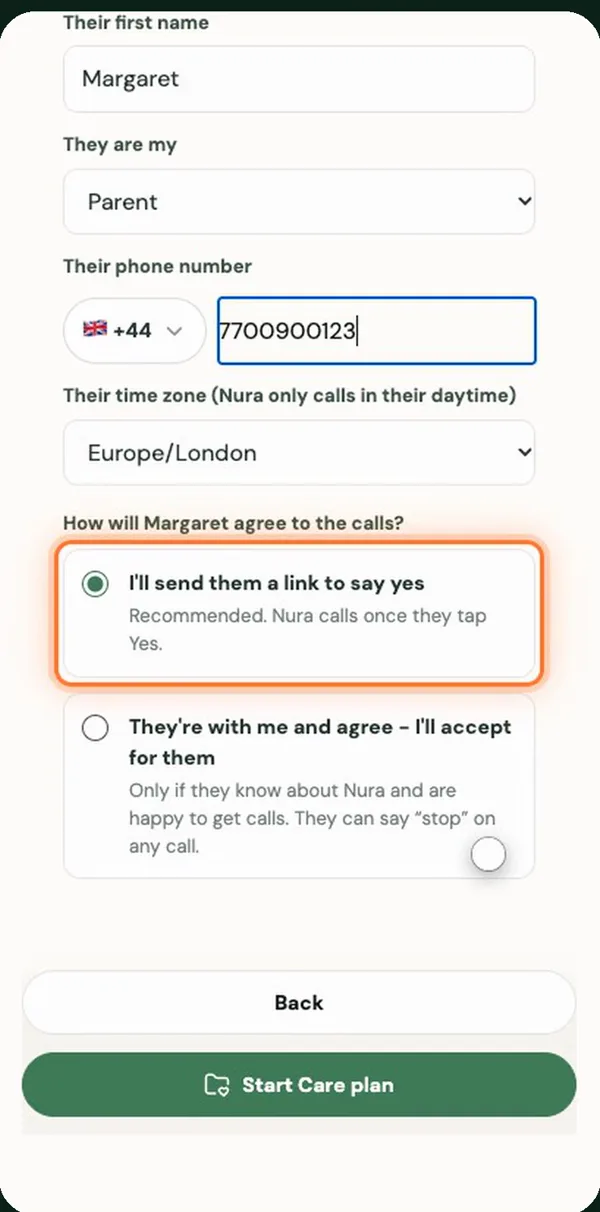
If you're far away, Nura can be the reminder call, with your parent's agreement. You start a Care plan about them and send them a link; once they tap Yes, Nura gives them a short call in their daytime (only between 9am and 8pm their time) and tells you how it went. Nura reminds and asks; it doesn't advise on doses or timings. Calls to someone you care for are part of Nura Plus.
Sources
General information, not medical advice. Nura does not diagnose, prescribe or replace your clinician. In an emergency call 999 (UK) or 911 (US); in the UK, NHS 111 can help if you need medical help but it isn't an emergency.