
A bedtime routine for adults that helps you sleep
Give yourself about an hour to wind down: dim the lights, put your phone away, do something calm like a bath, reading or stretching, write down anything on your mind, and go to bed when you feel sleepy. Do the same few steps in the same order every night, and get up at the same time each morning, so your body learns the pattern.
Why is this harder than it sounds?
Adults rarely have a bedtime routine; the evening just ends when the last email or episode does. Screens, late caffeine and a busy head keep you alert just when you want to switch off. The NHS suggests relaxing for at least an hour before bed and not using phones or watching TV right before, which is hard to do without a deliberate routine.
A sample bedtime routine
Adjust times to fit your wake-up time:
- 9:30pm: last caffeine long gone (the NHS suggests none in the 6 hours before bed). Finish eating; avoid big late meals.
- 10:00pm: lights down. Phone on charge outside the bedroom or on the other side of the room.
- 10:05pm: write tomorrow's to-do list and any worries on paper, so they're out of your head.
- 10:15pm: something calm: a bath or shower, a book, gentle stretches, quiet music.
- 10:45pm: bed, if you're sleepy. If not, keep reading somewhere else until you are.
- Same wake-up time every morning, including weekends.
What are good habits before sleeping?
Beyond the routine itself, the NHS suggests a dark, quiet bedroom (curtains, blinds, an eye mask or ear plugs if needed), a comfortable bed, regular exercise during the day but not in the 4 hours before bed, and avoiding alcohol and smoking in the evening.
What should you do?
Work back from your wake time
Decide when you need to get up, then plan the hour before you'd like to be asleep.
Pick three or four steps
Fewer steps you'll actually do beat an elaborate routine you'll skip.
Set a wind-down cue
An alarm or reminder an hour before bed that means "start the routine".
Keep the phone out of reach
Use a cheap alarm clock if your phone is your alarm.
Do it every night for two weeks
Then notice what's changed and adjust.
What tends not to work
Lying in bed scrolling until you feel tired.
A routine so long that you resent it.
Changing everything at once.
Common questions
How long before bed should a routine start?
The NHS suggests relaxing for at least an hour before bed.
Is reading on a phone OK before bed?
The NHS suggests not using devices like smartphones right before bed, because the light makes you more awake.
Where Nura fits
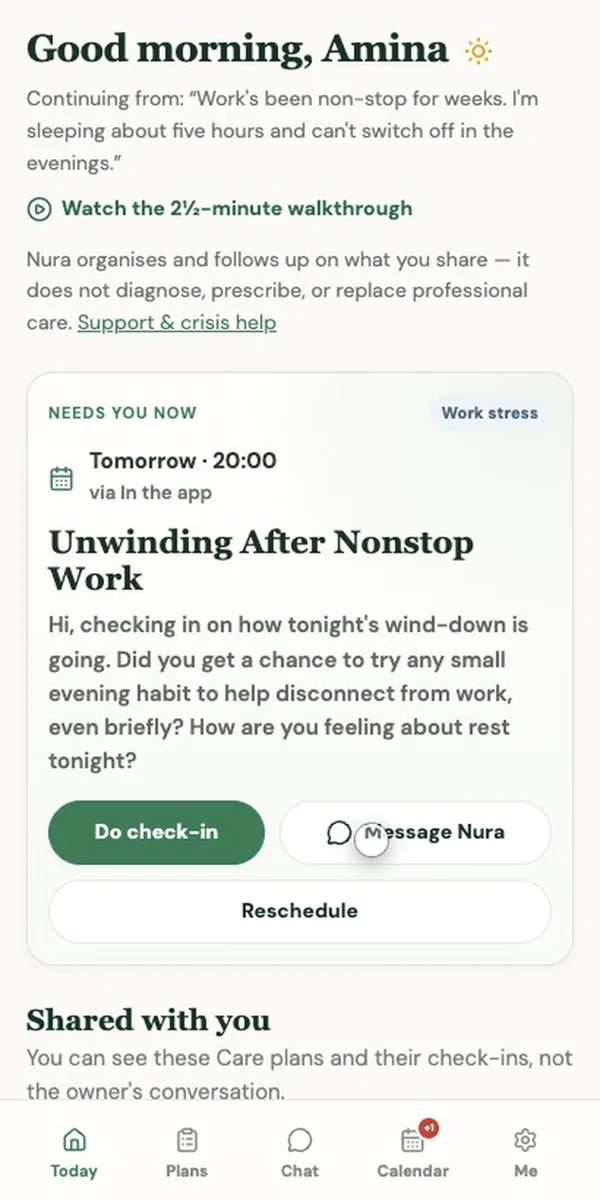
Nura can be your wind-down cue and the check-in the next morning. Tell it the routine you're trying and when, and it checks in at that time, in the app, on WhatsApp or with a short call, then asks how you slept so the routine adapts to what actually works. If a stressful week knocks you off, it shrinks the step rather than piling on. If you connect Apple Health or Health Connect, it can read a daily sleep summary (only the types you allow).
Sources
General information, not medical advice. Nura does not diagnose, prescribe or replace your clinician. In an emergency call 999 (UK) or 911 (US); in the UK, NHS 111 can help if you need medical help but it isn't an emergency.