
An AI companion for older adults who live alone
For an older person living alone, the most useful AI companion is one that does the reaching out: a short, friendly phone call or message at a set time each day to ask how they're doing and about the plan for the day, with no app to open once it's set up. It works best alongside people, not instead of them.
Why is this harder than it sounds?
Living alone can mean whole days without anyone asking how you are. The NHS notes that loneliness can affect anyone and suggests staying in touch with people, joining groups and keeping active; the NHS guidelines for older adults also encourage some activity every day. Many tech products expect a smartphone and confidence with apps, and companions you have to open yourself are easy to forget about.
What a daily check-in can cover
- How they slept and how they're feeling today.
- One small plan: a walk, a call to a friend, a club or class.
- Everyday routines they want help keeping, like drinking enough or getting out.
- A gentle follow-up on yesterday's plan.
What it should never be
A companion isn't an alarm, can't call for help, and doesn't replace visits, friends or professional care. For emergencies, a personal alarm or a plan with family is the right tool; the NHS lists falls advice and alarm services separately.
What should you do?
Decide who sets it up
They can set it up themselves, or a family member can set up calls for them, with their agreement.
Choose a time that suits their day
Mid-morning or after lunch often works better than early morning.
Keep it to a phone call if apps are a hassle
A call to their usual number needs no new skills.
Give it a real purpose
One small plan per day: a walk, a phone call to a friend, a meal with someone.
Keep people in the loop
Family can see how things are going if the person agrees, so the companion adds to contact rather than replacing it.
What tends not to work
Treating an AI as the only daily contact.
Using it in place of an alarm or emergency plan.
Setting it up without the person's agreement.
Calls at times they're usually out or resting.
Common questions
Do they need a smartphone?
Not for the calls. Someone needs to set Nura up on a phone or computer, but the check-ins themselves can be a short call to their phone number.
Can an AI companion help with loneliness in older people?
It can be a small daily point of contact and a nudge toward people and activities. The NHS advice on loneliness is to build real-world contact, such as groups, volunteering and talking to people you trust, so treat a companion as one support among several.
Can it call for help in an emergency?
No. Nura isn't an alarm or emergency service. Use a personal alarm and agree an emergency plan with family.
Where Nura fits
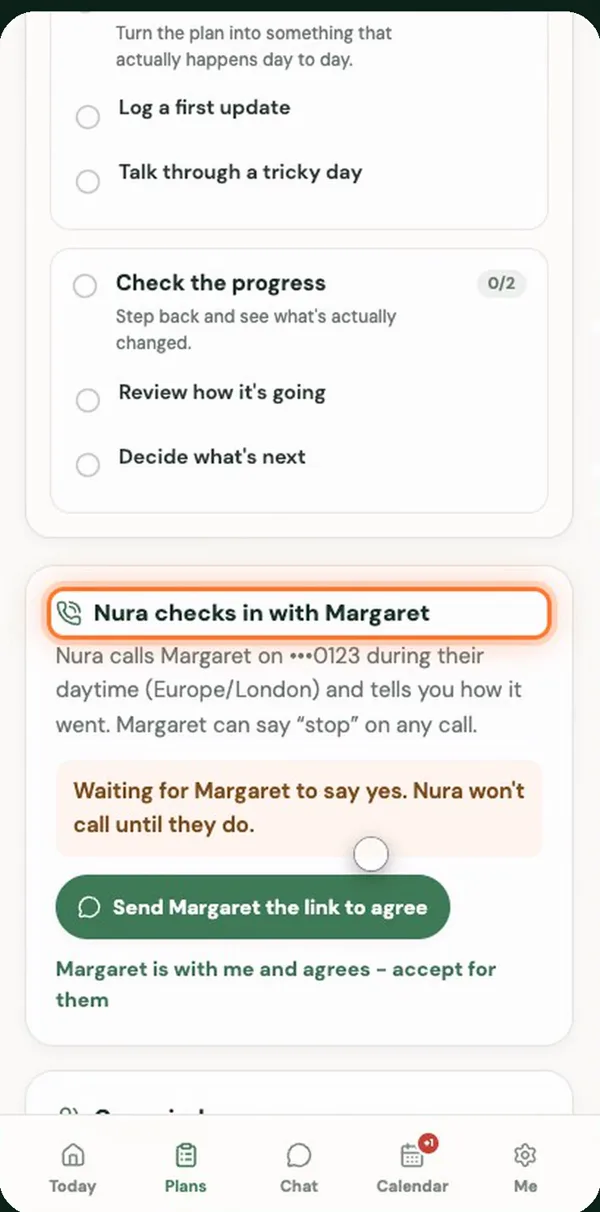
Nura can check in by a short phone call at a time that suits, so after setup there's nothing to open. An older person can use it for themselves, or a family member can choose "Someone I care for" and send them a link: Nura only calls once they say yes, only in their daytime, they can say stop on any call, and the family member hears how it went. Nura isn't an alarm or an emergency service. Nura Plus is US$9.99 a month after a 14-day free trial. Nura is a wellbeing companion, not therapy or an emergency service. If you're struggling to cope or in crisis, the NHS lists where to get urgent help, and Samaritans are on 116 123 in the UK at any time (call or text 988 in the US).
Sources
General information, not medical advice. Nura does not diagnose, prescribe or replace your clinician. In an emergency call 999 (UK) or 911 (US); in the UK, NHS 111 can help if you need medical help but it isn't an emergency.